

Waste clearance at Kingston Station and Clarence Street
Posted on 09/10/2026
Waste Clearance at Kingston Station and Clarence Street: A Practical Local Guide
If you are dealing with clutter, renovation debris, office waste, or an awkward pile of items near Kingston Station or along Clarence Street, you are not alone. Busy town-centre locations create a very specific kind of waste problem: limited access, tight parking, foot traffic, and the pressure to get everything removed quickly without causing a scene. That is exactly where waste clearance at Kingston Station and Clarence Street becomes useful.
This guide explains how local waste clearance works, what to expect, who it suits, and how to avoid the usual headaches. Whether you are a homeowner, landlord, shop owner, office manager, or builder, the goal is simple: get the space cleared properly, legally, and with as little disruption as possible. And yes, a bit of planning goes a long way here.
For readers who want a broader picture of the services available, it can help to start with the full services overview and then narrow down to the right clearance type for your situation.
Why Waste clearance at Kingston Station and Clarence Street Matters
Kingston Station and Clarence Street sit in one of the busiest parts of the town centre. That matters because waste in a high-traffic area is never just about "getting rid of stuff". It is about access, timing, public safety, and keeping a clean, professional appearance in a place where people are constantly arriving, shopping, commuting, eating, and working.
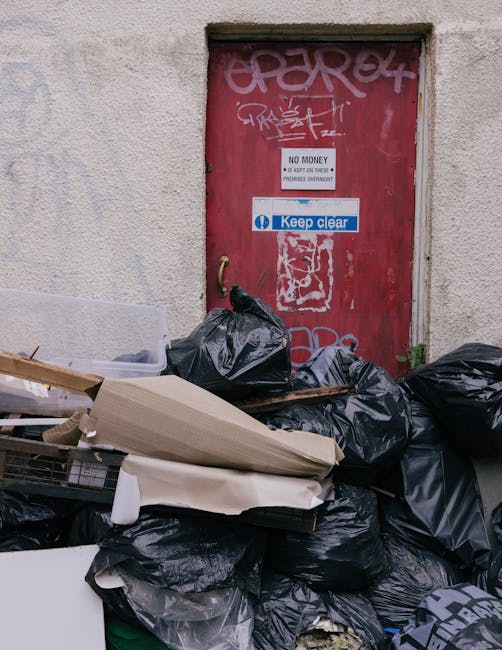
A small pile of rubbish outside a home on a quiet road may be annoying. The same pile near a station entrance, retail frontage, or office unit can become a real problem very quickly. It can block pathways, attract complaints, make a business look neglected, and even slow down building or moving schedules. In a place like Clarence Street, where people are in and out all day, the margin for error is tiny.
There is also the practical side. Clearing waste from central Kingston often involves narrow access, short loading windows, and very little patience for delays. If you have ever tried to move a sofa past a lunchtime crowd or carry bags of builders' rubble during rush hour, you will know the feeling. Not ideal.
Used properly, local waste clearance helps keep things moving. It supports residential moves, office refits, shop refurbishments, post-event clean-ups, and everyday decluttering. It also helps reduce the risk of fly-tipping, overflow, and unsafe storage of materials in shared or public-facing spaces.
For commercial customers, the subject ties closely to presentation and reputation. If a unit on or near Clarence Street is being prepared for new tenants or a fresh fit-out, time matters. In those cases, services such as office clearance in Kingston or builders waste disposal are often the most efficient route.
How Waste clearance at Kingston Station and Clarence Street Works
At its simplest, waste clearance is the organised removal of unwanted items from a property or business premises. In a busy Kingston location, the process is usually shaped by access restrictions, loading space, and the type of material being removed. That means the "how" matters just as much as the "what".
Most clearances follow a similar pattern:
- Assessment - The items are reviewed so the team can understand volume, weight, and any special handling requirements.
- Access planning - For town-centre sites, the collection point, parking, stair access, lift use, and timing all need to be thought through in advance.
- Quotation - Pricing is usually based on how much waste there is, what type it is, and how much labour is involved. A transparent quote is always better than a vague one.
- Removal - The team loads the waste safely and efficiently, trying to minimise disruption to neighbours, staff, or passers-by.
- Sorting and disposal - Reusable and recyclable items should be separated where possible, with the remainder taken to the appropriate waste facility.
The type of waste changes the practical approach. A few sacks of household clutter are very different from broken desks, bricks, plasterboard, or green waste. If you need a more general collection service for mixed rubbish, rubbish collection in Kingston upon Thames may be the right fit. For heavier refurbishment debris, dedicated construction support is usually smarter.
Here is the part many people underestimate: the best clearance job is often the one that looks easy from the outside. A van arrives, the items go, the area is left tidy, and nobody is left arguing about access or hidden extras. Simple, yes. But getting there takes a bit of care.
Key Benefits and Practical Advantages
There are obvious benefits to clearing waste quickly, but the real value is often in the things people do not notice until they are gone: the smell of stale cardboard, the visual clutter by the doorway, the awkward stack of items taking up a hallway, the worry that someone might trip over something. Once cleared, the whole space feels calmer. Quieter, even.
- Less disruption - A clear site is easier to move around, cleaner to work in, and simpler to present to customers or tenants.
- Safer access - Good clearance reduces trip hazards, blocked exits, and unsafe stacking.
- Time savings - A team that knows the area can remove items much faster than a DIY approach, especially in a crowded town-centre location.
- Better property presentation - If you are selling, letting, or refurbishing, a clean space usually photographs better and feels more usable.
- Improved recycling potential - A structured service is more likely to sort usable and recyclable material properly.
- Reduced stress - Truth be told, not having to worry about lifting, transport, and disposal rules is a relief in itself.
For some customers, the real advantage is flexibility. A good provider can handle a full property clearance, a single-room tidy-up, or a one-off collection after building work. If the job includes old sofas, tables, or office chairs, specialised furniture disposal in Kingston can be the most efficient option.
There is also a financial angle. Clearing waste promptly can help avoid extended labour time on refurbishment projects, reduce storage costs, and support faster handovers. For landlords and investors, that can be especially relevant; empty, tidy, ready-to-view spaces tend to move through the pipeline more smoothly. If that is part of your bigger plan, the local insight in investment tips for Kingston property buyers may be useful too.
Who This Is For and When It Makes Sense
This kind of clearance is not just for one type of customer. It is relevant to anyone who needs practical, organised removal of unwanted items in a busy part of Kingston.
Common users of local waste clearance
- Homeowners clearing out a flat, house, loft, or spare room
- Landlords and letting agents preparing a property between tenancies
- Office managers replacing desks, chairs, filing units, or old IT furniture
- Retail businesses refreshing shop floors or removing packaging waste
- Builders and tradespeople needing rubble, offcuts, and mixed site waste removed
- Event organisers clearing after functions, launches, or private parties
It also makes sense when the waste is simply getting in the way. Maybe you have inherited a property that needs emptying. Maybe the office finally got the green light for a re-fit. Maybe the loft has become a graveyard for Christmas decorations, broken suitcases, and things you have not looked at in years. We have all got one of those spaces.
If the job is mostly domestic, house clearance in Kingston or loft clearance in Kingston may fit best. If the work is tied to a garden tidy-up or seasonal cut-back, garden waste removal in Kingston upon Thames is usually the better route.
A small but important point: not every clearance needs to be a full load. Sometimes a partial collection solves the issue. A few bulky items can be enough to free up the room and change the whole feel of the space.
Step-by-Step Guidance
If you are arranging clearance near Kingston Station or Clarence Street for the first time, the process is easier when you break it down. A calm plan beats a frantic last-minute one every time.
1. Separate the waste by type
Start by identifying what you actually have. Mixed waste, furniture, cardboard, timber, green waste, and construction debris may all need different handling. This is not just a paperwork point; it affects loading, recycling, and pricing.
2. Decide what stays
Before anything leaves, decide what should remain. In shared homes or offices, this is where mistakes happen. A label on the wrong box, a misunderstood instruction, and suddenly someone's documents or equipment are on the van. Not fun.
3. Check access and parking
Town-centre access matters. If you are near Kingston Station or along Clarence Street, think about whether the clearance team can park close enough, whether they will need to use stairs, and whether there are time restrictions. A short walk with heavy items can quickly become a long, awkward one.
4. Get a clear quote
Ask what is included. Loading, labour, disposal, recycling, and access challenges should all be discussed before work starts. If the price sounds strangely low, ask why. Cheap quotes can come with awkward surprises later.
5. Prepare the space
Move fragile items, keep pathways open, and make sure the team knows what is being removed. A little preparation can save a lot of time.
6. Supervise the handover
Be available at the start if you can. That way, anything unclear can be resolved quickly. Once the collection begins, the job usually moves fast.
7. Check the finish
After the removal, walk the area and confirm that the agreed waste is gone and the space is left tidy. This sounds obvious, but on busy jobs it is worth doing.
If you want to understand how local pricing is handled in more detail, the page on pricing and quotes is a sensible next stop.
Expert Tips for Better Results
To be fair, the difference between a smooth clearance and a messy one often comes down to a few practical details. Nothing glamorous. Just smart prep.
- Photograph the waste before booking so the provider can assess the job properly.
- Group similar items together to speed up loading and reduce confusion.
- Measure bulky furniture if access is tight; a sofa that fits in the room may not fit down the stairs.
- Book around peak footfall where possible, especially if the site is near station traffic or shop opening hours.
- Ask about recycling if sustainability matters to you, particularly for office or shop clearances.
- Keep sensitive paperwork separate before any office or house clearance begins.
One small but useful trick: if you are clearing a room with lots of mixed items, put a sticky note on anything that must stay. That sounds almost too basic to mention, but it prevents a surprising number of mishaps. Tiny system, big payoff.
For clients who care about greener disposal, the company's recycling and sustainability approach is worth reviewing before you book. It helps set expectations about what can be diverted from landfill and what cannot.
Another tip: if you are clearing after a refit or strip-out, take a moment to separate building materials from household junk. The more clearly the waste is sorted, the more efficient the collection tends to be. That is where specialist builders waste disposal in Kingston can really help.
Common Mistakes to Avoid
Waste clearance sounds straightforward until something gets missed. Then it becomes one of those jobs everyone remembers for the wrong reasons. Here are the mistakes that crop up most often.
- Leaving access planning too late - On a busy street, parking and loading arrangements can make or break the job.
- Mixing everything together without checking - Useful items, recyclable material, and confidential documents can all end up in the wrong pile.
- Assuming every item can go the same way - Some materials need special handling.
- Choosing price over clarity - A vague quote is rarely a bargain if the final bill grows later.
- Forgetting to tell neighbours or staff - A heads-up can prevent complaints and avoid a lot of awkwardness.
- Not checking the finish - Once the van leaves, small missed items can be annoying to recover.
Another common issue is underestimating volume. A space that looks "nearly empty" can still produce far more waste than expected once boxes, under-shelf clutter, and hidden corner items are pulled out. Happens all the time, honestly.
If you are unsure whether a clearance job should be handled as domestic, commercial, or builders waste, ask before the job starts. That simple question often saves time later.
Tools, Resources and Recommendations
You do not need special equipment to prepare for a clearance, but a few practical tools make the process smoother.
| Tool or Resource | Why It Helps | Best For |
|---|---|---|
| Sticky labels or tape | Mark items to keep, remove, or sort later | Homes, offices, shared spaces |
| Phone camera | Helps document the job and send accurate pictures for quotes | All clearance types |
| Gloves and sturdy shoes | Protects against sharp edges and dust | DIY prep before collection |
| Measuring tape | Useful for large furniture or tight stairwells | Bulky item removal |
| Clear job notes | Keeps everyone aligned on what stays and what goes | Landlords, offices, busy households |
On the service side, it helps to work with a provider that is transparent about process, security, and responsibility. The website's about us page is useful if you want to understand who you are dealing with, while insurance and safety information is worth reading if the job involves awkward lifting, stair access, or larger items.
For people who are still comparing different service types, the general waste clearance service in Kingston is often the easiest starting point, then you can move into a more specific service if needed. Simple enough.
Law, Compliance, Standards, or Best Practice
Waste clearance in the UK is not just a matter of taking things away. Responsible handling matters, and customers should expect a provider to work in line with accepted legal and environmental standards. Without drifting into legal jargon, the key point is this: waste should be transported, sorted, and disposed of properly, with care taken not to create pollution, hazards, or fly-tipping risks.
In practice, that means a few things:
- Use a responsible operator who understands duty of care expectations.
- Check that waste is taken to appropriate facilities rather than dumped or handled casually.
- Treat hazardous or special items carefully and ask how they will be managed.
- Keep records where relevant for business waste, refurbishments, or landlord work.
If you run a business near Clarence Street or Kingston Station, compliance becomes especially important. Commercial waste should be handled in a way that protects staff, customers, and neighbouring properties. For that reason, services like office clearance and builders waste disposal should be discussed clearly before the job starts.
It is also sensible to ask about payment security and service terms if you are booking online or remotely. The pages on payment and security and terms and conditions are helpful references. Not exactly thrilling bedtime reading, granted, but very useful.
If the job touches sensitive information or customer data, proper clearance of documents and storage materials should be treated carefully. That is where having a structured process really matters, even for what looks like a simple clear-out.
Options, Methods, or Comparison Table
Not every waste problem needs the same solution. The best choice depends on the type of item, the volume, the location, and how quickly you need it gone.
| Method | Best For | Advantages | Trade-Offs |
|---|---|---|---|
| Full waste clearance | Large clear-outs, mixed items, property emptying | Most convenient, less labour for the customer | Usually the broadest service and may cost more than a small collection |
| Rubbish collection | Smaller loads, one-off waste removal | Quick and efficient for lighter jobs | Not always ideal for bulky or highly mixed waste |
| Furniture disposal | Sofas, tables, wardrobes, office desks | Specialised handling for bulky items | Needs access planning, especially in tight buildings |
| House clearance | Domestic moves, inherited homes, probate situations | Suitable for whole-property work | Can be emotionally and logistically more complex |
| Office clearance | Business relocations, refits, closures | Reduces downtime and frees up working space | May require out-of-hours timing or data-sensitive handling |
For many customers, the decision comes down to how fast they need the space back. A shop manager trying to clear stock-room clutter before the morning rush has a very different need from a landlord preparing a flat for the next tenant. The job should match the situation, not the other way round.
Case Study or Real-World Example
Here is a realistic example based on a common kind of job in central Kingston.
A small office just off Clarence Street had accumulated old filing cabinets, broken chairs, packaging, and a few awkward printer units after a reorganisation. The team wanted the space cleared before a Monday morning handover, but they had two problems: limited lift access and very little time. On top of that, the office sat in a busy area where loading had to be done carefully to avoid blocking the pavement.
The sensible approach was to separate the items into three groups: reusable furniture, general waste, and bulky broken equipment. The collection window was arranged to avoid peak footfall, the route from the office to the loading point was cleared in advance, and the team stayed on hand for quick decisions. Nothing fancy. Just organised.
That sort of planning matters because it reduces back-and-forth, saves time, and stops the clearance from becoming a scramble. The office was left ready for the next stage of work, and staff could get on with their day instead of stepping around unwanted furniture. Small victory, but a real one.
For a household version of the same story, picture a flat near Kingston Station after a long overdue declutter: an old sofa, two wardrobes, stacked boxes, and a loft full of forgotten items. Once the bulky things are removed, the rooms feel bigger almost immediately. You can hear the difference as well as see it. Less echo, less clutter, less mental noise.
Practical Checklist
Use this before booking or starting a clearance job near Kingston Station or Clarence Street.
- Confirm exactly what needs removing
- Separate anything that must stay
- Take photos for an accurate quote
- Check access, stairs, lifts, and parking
- Ask whether the waste includes furniture, builders waste, or mixed rubbish
- Prepare any fragile or sensitive items separately
- Choose a time slot that avoids unnecessary disruption
- Ask how recycling and disposal are handled
- Review pricing, terms, and payment details
- Do a final walkthrough once the clearance is complete
If you are preparing a property for sale or tenancy, combining clearance with a broader look at the local market can be useful too. Readers exploring the area may also find what locals say about living in Kingston relevant, especially if they are weighing up how quickly a property can be made ready.
Conclusion
Waste clearance at Kingston Station and Clarence Street is really about more than hauling items away. It is about making a busy part of Kingston easier to use, safer to move through, and simpler to manage. When the work is planned properly, the benefits are immediate: cleaner spaces, less stress, better presentation, and fewer avoidable delays.
Whether you are clearing a flat, an office, a shop unit, or a renovation site, the best results usually come from clear communication, realistic planning, and a service that understands local access conditions. That combination saves time, and it saves headaches too.
Get a free quote today and see how much you can save.
And if you are still comparing options, take a moment to look through the wider service overview so you can choose the right fit the first time. A tidy space has a way of making everything feel a bit more manageable, doesn't it?

 Tipper Van - Rubbish Removal and Waste Collection Prices in Kingston, KT1
 Luton Van - Rubbish Removal and Waste Collection Prices in Kingston, KT1

