

What to know about bulky rubbish pickup access in Kingston
Posted on 18/06/2026
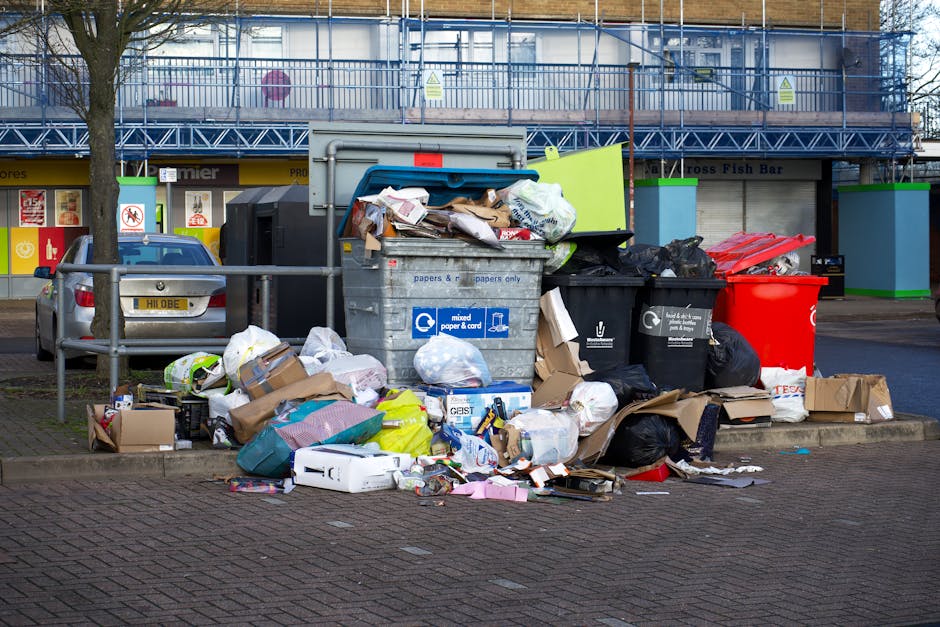
If you are planning a bulky rubbish pickup in Kingston, access is often the bit that makes everything smooth or, to be fair, slightly awkward. A sofa that looks simple in the living room can become a real nuisance once it has to pass a narrow hallway, a shared entrance, a couple of turns on the stairs, and a parked car outside. That is why understanding bulky rubbish pickup access in Kingston matters before collection day. It helps you avoid delays, extra handling, and the classic last-minute panic when the crew arrives and the item is nowhere near the front door.
This guide explains how access works, what collectors usually look for, who needs to think about it most, and how to prepare your property so the job goes quickly. You will also find practical examples, a checklist, a comparison table, and a few common mistakes that are easy to avoid once you know what to watch for.
Expert summary: if you can make the route from item to vehicle clear, safe, and predictable, you are already most of the way there. Good access saves time, reduces risk, and usually makes the whole service feel far less stressful.
Why bulky rubbish pickup access in Kingston matters
Access is the difference between a tidy, efficient collection and a job that drags on because everyone is improvising. In Kingston, that matters more than many people expect. You get a mix of flats above shops, period terraces, maisonettes, modern developments, and tight residential streets where parking is never exactly generous. Add a heavy wardrobe, a broken treadmill, or a couple of old mattresses, and the route out starts to matter as much as the items themselves.
From a practical point of view, access affects three things:
- Time - the easier the route, the quicker the pickup.
- Safety - fewer carrying risks for staff and less chance of damage to walls, floors, or doors.
- Pricing clarity - awkward access can change the amount of labour needed, which may affect the quote.
That does not mean difficult access is a disaster. Not at all. It just means it needs a bit of planning. A narrow staircase, a shared driveway, a basement flat, or no parking outside are all manageable if they are mentioned early. The problems usually appear when nobody brings them up until the van is outside and the item is still wedged in a corner. Not ideal, obviously.
If you are sorting out a larger clearance rather than a single-item pickup, it can help to understand how a full service is structured. A broader waste clearance overview can give you a useful sense of what is typically included, while local rubbish collection in Kingston upon Thames is often the more suitable route when you need speed and direct collection from the property.
Key point: if access is awkward, say so upfront. That one small detail can save a surprising amount of time and friction later on.
How bulky rubbish pickup access works
In simple terms, bulky pickup access is about how easily a team can get from the vehicle to the item and back again. It is not just about whether the item can leave the building. It is also about whether it can leave without damage, obstruction, or unsafe lifting.
Most collections involve a quick assessment of the following:
- Entrance width - doors, gates, hallway corners, and stairwell turns.
- Distance to kerbside or vehicle - the shorter the carry, the better.
- Parking or stopping point - whether the van can get close enough legally and safely.
- Floor level - ground floor is usually simpler, upper floors may take more time.
- Obstacles - lifts, bins, shared corridors, garden paths, low ceilings, bikes, prams, and the odd clutter pile.
- Item condition and weight - a light bedside cabinet is not in the same league as a solid oak bed frame or a fridge freezer.
Here is the thing: access is rarely one single issue. It is usually a mix. A flat may have a lift, but the lift might be too small for the item. A house may have a driveway, but the front gate could be too narrow for the route. A shopfront might have easy street access but only at certain times because of traffic or loading restrictions. You start to see the pattern.
Good providers normally ask a few access questions before giving a proper quote. If they do not, you should volunteer the details yourself. Mention the property type, floor level, parking situation, and anything awkward like stairs, steep paths, or shared entrances. If you are unsure what to say, a short video or a couple of photos can be surprisingly useful. In our experience, a clear picture is often worth more than a vague promise that "it should be fine".
For larger household jobs, access planning becomes even more useful. A house clearance in Kingston often involves several rooms, heavier furniture, and more moving parts. For work-related jobs, an office clearance can involve lifts, secure entry points, loading bays, and building rules. And if the bulky waste includes a sofa, table, or old bed, furniture disposal in Kingston can be much smoother when access is checked early.
Key benefits and practical advantages
When access is planned properly, the whole job feels calmer. Not glamorous, but calm is underrated. The benefits are practical and immediate.
- Less disruption - you are not moving furniture around repeatedly while trying to find a route out.
- Faster collection - the crew can work efficiently instead of spending time improvising.
- Reduced risk of damage - walls, bannisters, doors, and floors are less likely to get knocked.
- Clearer pricing - there is less chance of a quote changing because access was misunderstood.
- Better timing - same-day or scheduled collections are easier to keep on track.
There is also a hidden benefit that people tend to overlook: peace of mind. If you know the route is clear, you do not have to hover by the door wondering whether the item will fit through the stairwell. That sounds small, but when you are trying to clear out a flat, or finish a renovation, those little stress points stack up fast.
For households doing a broader tidy-up, access planning can help you choose the right service. A loft packed with old boxes and seasonal clutter may point you towards a loft clearance. Garden cuttings and old compost bags are usually better suited to garden waste removal. Once you match the job to the access you actually have, things become much simpler.
Who this is for and when it makes sense
This topic matters to a lot more people than you might think. If your property makes moving large waste awkward in any way, you will want to pay attention.
- Flat owners and tenants - especially if you live on upper floors or in buildings with shared corridors.
- Landlords and letting agents - access delays can affect turnaround between tenancies.
- Homeowners renovating rooms - old furniture, carpets, and fixtures often need clearing while work is ongoing.
- Small business owners - office furniture and stockroom junk can be bulky and time-sensitive.
- Builders and trades - rubble, timber offcuts, old units, and packaging need safe loading.
It also makes sense if you have a one-off awkward item. A washing machine in a utility room. A wardrobe that was assembled before anyone thought about the door frame. An exercise bike that somehow weighs twice as much as it looks. We have all seen a simple-looking job turn into a small puzzle.
If you are working around a refurbishment or contractor schedule, it is worth reading about builders waste disposal in Kingston. For commercial customers, an office clearance service is often the better fit than trying to piece things together yourself. And if you are dealing with a full property emptying after a move or inheritance situation, the broader approach described in a house clearance can be much less chaotic than multiple single-item pickups.
Step-by-step guidance
Here is a straightforward way to prepare for bulky rubbish pickup access in Kingston.
- List everything that needs removing. Write down the items, especially the heavy or oversized ones. If there are stairs, tight turns, or fragile surfaces, note them too.
- Check the route from room to exit. Measure door widths if you are unsure. Look at hallway corners, porch steps, low ceilings, and anything that narrows the path.
- Think about parking and stopping space. Can a van get close? Is the road busy at the time you want the pickup? Is there a permit or shared access issue?
- Clear the path in advance. Move shoes, bins, plant pots, child gates, and anything else that might slow down carrying.
- Separate items by type if you can. Put furniture together, keep general rubbish apart, and flag anything that may need special handling.
- Tell the provider about access quirks. Basement stairs? Narrow lift? One-way street? Mention it. Honestly, it is better to overshare a little than leave someone guessing.
- Confirm timing and arrival instructions. If there is a coded entry, concierge desk, or shared front gate, make sure the team knows before they arrive.
- Do a quick final sweep. On the day, check that the route is clear and that the items you want gone are easy to identify.
A small but useful habit: take a photo of the access route before collection day. Not the waste itself necessarily, but the corridor, staircase, drive, or alleyway. It helps if you need to explain a tight space quickly. One minute of prep can avoid a very long conversation later.
If you want to compare how different removals are handled, a simple browsing of waste clearance in Kingston and related collection pages can also help you understand which jobs are better suited to a full-service team and which are more straightforward one-offs.
Expert tips for better results
Here are the practical tips that tend to make the biggest difference.
- Lead with the awkward bit. If the item is on the third floor or the road is tight, say that first.
- Be honest about weight. "Very heavy" is useful. "Probably manageable" is not, unless you mean it.
- Avoid collection-day reshuffling. If the item needs three people to move it, do not leave it trapped behind five smaller objects.
- Use the narrowest point as your test. Door width is less helpful than the tightest corner on the route.
- Check neighbours and shared access rules. In flats and terraces, another resident's car or bin placement can affect the carry route.
- Keep sharp edges and loose glass safe. Tape, wrap, or isolate them if needed.
Another tip, a little boring but very useful: ask whether there are any access limitations before the team arrives. It sounds obvious, yet people often assume that a van can simply "sort itself out" on the day. In reality, local streets, parking zones, and loading constraints can make a big difference, especially in busier parts of Kingston.
If you are trying to get rid of items quickly, it may help to read about same-day rubbish clearance delays and solutions. And if you are comparing prices, a guide on avoiding hidden fees in Kingston rubbish removal quotes is a sensible companion read before you book anything.

Common mistakes to avoid
Most access problems are avoidable. They tend to come from small assumptions rather than major errors.
- Assuming everything will fit through the same route. A sofa might leave through a patio door but not through the hallway.
- Forgetting about parking. The collection can be perfectly planned and still stall if the vehicle cannot stop legally nearby.
- Leaving access notes until the last minute. That is where rushed arrangements and surprise charges tend to appear.
- Not measuring the awkward items. If you have a large wardrobe or bed base, measure before collection day.
- Ignoring building rules. Shared entrances, concierge arrangements, lift bookings, and time slots all matter more than people expect.
- Mixing waste types together. It can be harder to load and sort, especially when access is already tight.
One especially common mistake is underestimating how long it takes to move bulky items from a top floor flat. It is not only about strength. It is about corners, breath, balance, and not scraping someone's paintwork. The job can be done, of course, but the route needs to make sense.
If you live near Kingston town centre or around busier commercial streets, local access can be a bit more complicated than it looks from the pavement. A few area-specific reads such as rubbish removal near Bentall Centre and rubbish collection in the Canbury and Kingston Bridge area can give you a feel for how location changes the day-to-day reality.
Tools, resources and recommendations
You do not need fancy equipment to prepare well. Most of the useful tools are simple.
- Tape measure - for doors, hallways, lift doors, and item dimensions.
- Phone camera - for photographing access routes and awkward items.
- Marker labels or sticky notes - helpful if multiple items are being removed.
- Gloves and sturdy shoes - useful if you are doing any sorting yourself.
- Simple floor protection - old blankets or cardboard can help when moving heavy furniture.
For service planning, these pages are handy starting points: pricing and quotes, insurance and safety, and recycling and sustainability. They are useful because access is not just about logistics; it is also about confidence that the job is being handled carefully and responsibly.
If you are choosing a provider, a good rule is to look for clarity before charisma. Friendly is great. Clear is better. You want straightforward answers about access, timing, included labour, and what happens if the site conditions turn out to be trickier than expected. That kind of honesty saves headaches. Simple as that.
Law, compliance, standards, or best practice
Access planning sits alongside wider UK waste-handling expectations. You do not need to memorise legislation to arrange a pickup, but it helps to understand the broad principles.
At a practical level, collectors and property owners should take care to avoid unsafe lifting, blocked exits, damage to communal areas, and unauthorised obstruction of roads or pavements. If waste includes electrical items, sharp objects, or anything with potential hazard, the safer route is always better than the quicker one. In shared buildings, it is also wise to respect building management rules, lift bookings, and loading restrictions.
Best practice usually looks like this:
- Give accurate access information before the appointment.
- Keep escape routes and communal areas clear.
- Use safe lifting and carrying methods.
- Separate unusually heavy, fragile, or awkward items where possible.
- Confirm what will be collected and what should stay behind.
If you want a sense of the company's broader approach to service, policies and care, pages such as about us, terms and conditions, payment and security, and accessibility statement can help you judge how organised and user-focused the service is likely to be.
And yes, the legal side can feel a bit dry. But dry is fine when it means nobody trips over a filing cabinet in a shared hallway.
Options, methods, or comparison table
There are a few ways to deal with bulky rubbish access in Kingston, and the right one depends on the item, building, and timing.
| Method | Best for | Strengths | Limitations |
|---|---|---|---|
| Kerbside collection | Properties with easy roadside access | Simple, quick, often efficient | Not suitable if items cannot be moved outside safely |
| Man-and-van pickup | Single items or smaller loads | Flexible and often fast | May be less ideal for complex access or multiple floors |
| Full clearance service | Large homes, offices, mixed bulky waste | More hands, more planning, easier for awkward sites | Usually more involved than a basic collection |
| Pre-staged collection | Items that can be safely placed near the exit beforehand | Speeds up the job and reduces carrying distance | Requires preparation and space inside the property |
To put it plainly: if your access is straightforward, a smaller collection option may be enough. If you have stairs, a long carry, or building restrictions, a fuller service is usually easier. The main thing is matching the method to the reality of the property instead of hoping the property will magically become simpler. It rarely does, annoying as that is.
For some readers, the best next step is comparing a single bulky-item collection against a larger property clearance. If that is you, the pages on furniture disposal and house clearance will help you decide which route feels more practical.
Case study or real-world example
Imagine a second-floor flat near Kingston town centre. The resident needs to remove a sofa bed, a broken desk, and an old chest of drawers. On paper, not a huge job. In reality, the stairwell has a sharp turn at the landing, the front entrance is shared, and parking outside is limited in the late morning.
What made the difference here was not muscle. It was preparation. The resident measured the sofa bed in advance, sent a couple of photos of the corridor and stairwell, and mentioned that parking was easiest before 10:00. The collection team arrived knowing the route, brought the right number of people, and moved the items without needing to stop and rethink the process halfway through.
Now compare that with a different scenario: the same items, but no measurements, no mention of the narrow turn, and no parking update. That is how a straightforward job becomes slow and stressful. A single awkward angle can change the whole rhythm. You can almost hear the sighs before the first item even starts moving.
If the collection is part of a larger lifestyle change, you may also find local context useful. For a sense of the neighbourhood and how people use Kingston day to day, what locals say about living in Kingston is a good companion read, while shopping and dining in Kingston shows how busy the area can feel at street level.
Practical checklist
Use this before your bulky rubbish pickup in Kingston.
- Measure the item or items that need removing.
- Check door widths, stair turns, and lift size if relevant.
- Confirm the parking or stopping point for the vehicle.
- Clear the path from item to exit.
- Identify any shared access, codes, or concierge instructions.
- Separate bulky waste from general rubbish where possible.
- Tell the provider about stairs, narrow corridors, or long carries.
- Take photos if the access route is unusual.
- Check whether any items need special handling.
- Keep the route free on collection day.
- Ask about timing if your road gets busy at certain hours.
Quick reminder: the best access plan is usually the simplest one that removes uncertainty. Not perfect. Just clear enough to work.
Conclusion
What to know about bulky rubbish pickup access in Kingston comes down to a surprisingly simple idea: if the route is clear, the job gets easier, safer, and usually more cost-effective. Whether you are dealing with a single heavy item or a more involved clearance, access is one of those details that quietly decides how the day will go.
Take a few minutes to measure, check parking, clear the path, and tell the provider what they need to know. That small bit of effort tends to pay for itself in reduced stress. And in a place like Kingston, where properties and street layouts vary so much, it is genuinely worth doing. No drama, no guesswork, just a cleaner, calmer result.
Get a free quote today and see how much you can save.
When the route is sorted, the rest tends to fall into place. That is a nice feeling, really.

 Tipper Van - Rubbish Removal and Waste Collection Prices in Kingston, KT1
 Luton Van - Rubbish Removal and Waste Collection Prices in Kingston, KT1

